
Custom Wood Machining: What It Actually Takes to Get It Right
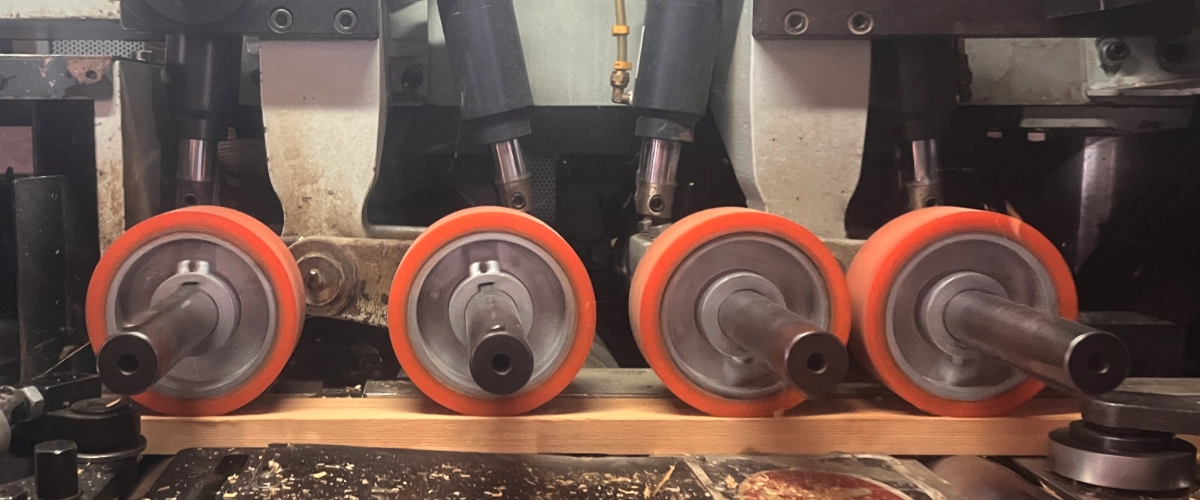
There’s a moment every woodworker knows well. You’ve got a design in your head, the wood is sitting right in front of you, and you’re confident it’s all going to come together perfectly. Then reality hits, and suddenly the tolerances are off, the grain isn’t cooperating, and what seemed straightforward has become a frustrating puzzle.
That’s exactly why custom wood machining deserves a much closer look than most people give it. It’s not just about having the right tools or following a set of instructions. It’s about understanding the relationship between your material, your machinery, and your intended outcome, because all three have to work in harmony.
In this post, we’re going to break down what actually goes into getting custom wood machining right. We’ll look at the key variables that affect your results, the common mistakes that trip up even experienced woodworkers, and the practical decisions that separate clean, precise work from costly rework. Whether you’re stepping up your shop game or evaluating a production process, this analysis will give you a clearer picture of what’s really happening when wood meets machine.
What Custom Wood Machining Actually Means
Most people hear “custom wood machining” and picture someone running a board through a table saw to hit a specific length. The reality is significantly more involved than that, and understanding the full scope is what separates buyers who get exactly what they need from those who end up with compounding problems down the line.
True custom wood machining is an integrated system of processes. Resawing breaks thick stock into thinner boards while preserving grain orientation. Surfacing planes and joints faces to achieve flat, parallel planes. Moulding shapes profiles and edges. Trimming squares up ends to precise lengths. Finger jointing connects shorter pieces into longer, defect-free stock. Each of these operations feeds directly into the next, which means the sequence matters as much as any individual step. A surfacing issue that leaves stock slightly uneven doesn’t just affect that board; it creates an inconsistent baseline for every moulding pass and joint that follows. Errors compound rather than cancel out.
This is part of why the woodworking machinery market sits at $5.23 billion in 2025, projected to reach $9.03 billion by 2034 at a 6.5% CAGR. That growth is being driven almost entirely by CNC adoption and rising precision demand across furniture, construction, and industrial millwork. Buyers want tighter tolerances and consistent repeatability, and that requires purpose-built equipment managed by people who understand how each process stage interacts.
Softwood remanufacturing adds another layer of complexity that hardwood CNC work simply doesn’t share. Species like Douglas Fir, Hemlock, and Western Red Cedar behave differently under cutting tools than dense hardwoods do. Resin content, knotty grain patterns, and moisture response all influence feed rates, tooling selection, and drying protocols. A process optimized for oak won’t translate directly to spruce without adjustment.
This is where buyers frequently get caught off guard. A basic custom wood machining service might handle your initial cuts, but a capable end-to-end partner manages material selection, moisture control, defect removal, precision profiling, and quality verification as one connected workflow, not a series of isolated steps.
Where Tolerances Make or Break the Job
Tolerances aren’t just a spec-sheet number. In real production environments, a slip of even a fraction of an inch can cascade into serious downstream problems. If a board comes off the line even slightly out of spec, it may not fit the assembly it’s destined for, it could create inconsistencies in finishing that require sanding or filling, or it might mean an entire batch needs rework. That rework costs time, material, and money, and it often compounds when you’re running high volumes. The margin for error in precision custom wood machining is genuinely thin.
What Achievable Tolerances Actually Look Like
Hitting 1/32-inch precision tolerances is possible, but only when your equipment is working as a coordinated system. Resaws, planers, and moulders each contribute to the final dimension of a part, and if any one of them is running out of calibration, the tolerance stack-up compounds across each stage. A resaw might take a board to rough dimension, the planer refines that surface, and the moulder brings it to final profile. If the resaw is inconsistent, the planer is compensating for variation it wasn’t designed to absorb, and the moulder ends up working harder than it should. Every machine in that chain has to be dialed in together.
Baker resaws are a strong example of how equipment design directly supports dimensional accuracy. Operating at a 1/16-inch kerf, they remove far less material per cut than traditional saw setups. That matters in two ways: it reduces material waste on every pass, which is significant in high-volume runs, and it leaves cleaner, more dimensionally consistent stock heading into the next stage of processing. Less waste per cut also means less variation to correct downstream.
The Human and Process Side of Precision
Here’s something that doesn’t get enough attention: machine specs don’t run your shop – people and processes do. Consistent tolerances across a full production run depend on regular machine calibration, operator expertise in setup and monitoring, and disciplined process sequencing. Wood’s natural variability, including moisture content shifts and grain movement, means that even well-calibrated equipment requires active management throughout a run.
This is exactly why technical buyers should push vendors on verification methods, not just advertised specs. Ask how tolerances are confirmed across a full production run, not just on a first-article sample. Are they using statistical process controls? Calibrated measurement protocols? Regular sampling across a batch? A vendor confident in their process will have clear answers to those questions. One that hesitates probably isn’t verifying the way you need them to.
Species Selection and Why It Is Not Interchangeable
Not all softwoods are created equal, and treating them as interchangeable is one of the fastest ways to end up with a finished product that doesn’t meet spec. The differences aren’t subtle; they show up directly in cut quality, tooling wear, and how the finished piece performs years down the line.
Douglas Fir is a good example of a species that cooperates well under moulding. Its density and relatively straight grain allow it to hold tight dimensions through high-speed passes, which is why it shows up consistently in architectural millwork and structural applications where dimensional consistency isn’t negotiable. Western Red Cedar, on the other hand, is significantly lighter and more fibrous. Run it at the same feed rate as fir and you’ll get tear-out. Slowing the feed and keeping tooling sharp makes a real difference with cedar, and operators who know this going in save a lot of material and rework time.
The other species in the Western softwood family each bring their own set of variables. Hemlock performs well in mouldings but has earlywood and latewood transitions that can affect surface smoothness if process settings aren’t dialed in. Spruce is easy to work but its lower density makes it more prone to tear-out if feeds aren’t controlled. Alaskan Yellow Cedar is prized for its fine texture and stability, making it a strong candidate for precision exterior applications. Ponderosa Pine and Sugar Pine both machine cleanly and hold finishes well, with Sugar Pine being especially forgiving in pattern and joinery work due to its uniform texture. The Western Wood Products Association and Softwood Export Council document these distinctions in detail, and they matter in practice.
This is also where softwood remanufacturing expertise separates itself from general hardwood CNC work. Hardwood CNC operations optimize for density and abrasion resistance. Softwood remanufacturing, especially high-volume moulding and planing for millwork or siding, requires a different knowledge base around moisture control, resin behavior, and tooling selection specific to lighter, fibrous materials.
If you’re sourcing for architectural millwork, siding, or structural applications, the machining partner you choose needs to understand how each species behaves under their specific equipment, not just how to cut wood in general. Species performance directly determines whether your finished product holds tolerance, takes finish evenly, and stays dimensionally stable in its end-use environment.
Kiln Drying and Why It Has to Come Before Machining
Here’s something that catches a lot of buyers off guard: you can execute a perfect cut and still end up with parts that don’t fit. If the lumber wasn’t properly dried before it went through the machine, the wood will continue to move after machining. Warping, cupping, and shrinkage don’t care how precise your equipment is. They’re driven by moisture leaving the wood, and that process doesn’t stop just because you’ve already run the board through a planer or resaw.
Wood is hygroscopic by nature, meaning it absorbs and releases moisture in response to its surrounding environment. Green lumber can sit well above 30% moisture content. As it dries below the fiber saturation point, it shrinks primarily across its width and thickness. If that drying happens after machining, the dimensions you cut to are no longer the dimensions you’re delivering. Kiln drying brings lumber to a stable, target moisture content before machining begins, so what you machine to is what holds through the entire chain from production to installation.
Proper kiln drying schedules use controlled temperature, humidity, and airflow in stages, often including a conditioning step at the end to relieve internal stresses. This isn’t just about hitting a moisture number; it’s about producing lumber that behaves predictably when it’s cut, glued, or finished.
Heat treatment adds another layer of compliance to this conversation. Cross-border shipments increasingly require documented heat treatment certificates under international phytosanitary standards, and certain commercial construction contracts are starting to mirror that requirement. A kiln that also delivers heat treatment documentation covers both the dimensional stability and the compliance side in a single process.
Operating four on-site kilns at Prime Forest Remanufacturing means drying happens in sequence with the rest of production, without handing off a critical step to a third party. That matters because outsourcing introduces queue times, potential moisture inconsistencies between facilities, and traceability gaps. When you’re evaluating a custom wood machining partner, it’s worth asking directly whether drying is handled in-house. If it’s subcontracted, you’re accepting variability at a stage where consistency is non-negotiable.
What Real Customization Looks Like at Scale
The phrase “75,000 custom configurations” sounds like classic marketing copy until you actually break down how that number is reached. When you start layering variables together, including species selection across Douglas Fir, Hemlock, Western Red Cedar, and others, alongside dimensional specs, cut types, moisture content targets, grade classifications, and packaging requirements, the combinations multiply fast. This isn’t a stretched figure; it reflects the genuine combinatorial depth of what a well-equipped remanufacturing operation can produce to order. Even conservative counts across each variable category stack into tens of thousands of viable, distinct outputs. The math is straightforward once you see how many decisions go into a single order.
Custom knife and pattern capabilities take this a step further on the moulding side. Buyers working on projects with specific profile requirements, whether matching historic trim, coordinating an architectural package, or hitting a unique design spec, don’t have to bend their design to fit whatever standard profiles a vendor happens to stock. When a facility can grind project-specific knives in-house and run them on industrial moulders, the profile becomes a production input rather than a design constraint. That distinction matters significantly for millwork-heavy projects where a forced compromise on profile geometry creates visible inconsistency across the finished installation.
Accessibility is another piece of the equation that often gets overlooked. No strict minimums on common species means a smaller run or a specialty order doesn’t automatically come with a pricing penalty or a longer lead time tacked on as an implicit fee for being a smaller buyer. This aligns directly with the broader shift toward on-demand, high-mix production that’s reshaping the woodworking industry through 2025 and beyond.
The real test for any buyer evaluating a custom wood machining partner comes down to one practical question: can the vendor actually back up the claim? Equipment depth matters here; multiple moulders, resaws with minimal kerf, dedicated kilns, and in-house knife grinding capability aren’t interchangeable with a vendor who outsources tooling or runs a limited machine mix. Process flexibility matters equally, covering quick tooling changes, the ability to handle variability across species and moisture specs within a single production run, and consistent output quality across both small and large orders. Claims are easy. The equipment list and process documentation tell you whether those claims hold up under real production conditions.
Certifications: FSC and PEFC in Plain Terms
FSC and PEFC are the two dominant global systems for certifying responsible forest management and wood product traceability. Both require independent, third-party audits of the entire supply chain, from the forest itself through every processing step to the final product. What that means practically is chain-of-custody documentation that tracks wood at each stage, preventing it from being mixed with uncertified or questionable sources. When a supplier holds either certification, it signals that someone outside the company has verified the sourcing claims, not just taken the supplier’s word for it.
These certifications have moved well past “nice to have” territory. As of 2026, commercial construction and millwork procurement contracts are increasingly listing FSC or PEFC compliance as a hard requirement, particularly on projects targeting LEED, BREEAM, or WELL building ratings. For architects, general contractors, and specifiers, working with certified lumber directly reduces the documentation burden tied to sustainability reporting and regulatory due diligence under frameworks like the U.S. Lacey Act.
Holding both certifications, as Prime Forest Remanufacturing does, is increasingly a competitive differentiator rather than a checkbox exercise. The FSC certifies over 165 million hectares globally, while PEFC reports nearly 300 million hectares of certified forests across 88 countries, reflecting the scale of demand driving these standards.
One thing buyers often overlook: verify that certifications are current and explicitly cover the specific species and product lines you are sourcing. A company can hold a certification at the organizational level that does not extend to every product or species they offer. Request chain-of-custody documentation and confirm the scope before it becomes a project-level problem.
How to Evaluate a Custom Wood Machining Partner
Choosing the right custom wood machining partner comes down to asking the right questions before you commit, not after a bad run reveals the gaps. Here is a practical framework for vetting partners in a way that reflects how production actually works.
Start with tolerance verification, not equipment specs. Any vendor can list the theoretical capabilities of their machinery. What you actually want to know is how tolerances are confirmed across a full production run, from the first piece to the last. Ask what in-process checkpoints exist, whether first-article inspections are documented, and how out-of-tolerance parts are caught before they ship. Equipment capability and process discipline are two different things, and the second one is what protects your production.
Species expertise is not universal. A vendor with deep experience in hardwood finishing may not have optimized processes for softwood remanufacturing. Softwoods like Douglas Fir, Hemlock, or Western Red Cedar behave differently under tooling, respond to moisture differently, and require different parameter adjustments for clean surface quality. Ask specifically about the species you are sourcing, and push for examples or case studies, not just a general “yes, we work with wood.”
In-house drying capacity matters more than most buyers realize. Outsourced kiln drying adds scheduling variables and opens the door to moisture inconsistency during transport and handling. Ask directly whether drying is handled on-site, what target moisture levels are maintained, and whether drying certificates are issued. Partners with in-house kilns (like Prime Forest Remanufacturing) document heat treatment processes and give you tighter control over quality and lead times.
Certifications, order flexibility, and packaging tell you whether a partner fits your workflow. FSC and PEFC certifications signal accountability in sourcing and documentation. Flexible minimums mean you are not forced into overstock situations. Packaging options that match your assembly or shipping requirements reduce handling damage and extra labor on your end.
Finally, pay attention to how a vendor talks about lead times and tight specs. A straightforward answer, including an honest acknowledgment of what gets complicated when tolerances are tight, is a good sign. Vague answers are useful information too; they tell you where to probe further or walk away.
Getting the Right Result Starts with the Right Partner
Custom wood machining done well is not complicated at its core. What makes it work, or fail, is whether the right equipment, species knowledge, drying capacity, and process controls are all functioning together as a unified system rather than a loose collection of individual capabilities. When those pieces are aligned, getting from spec to finished product is a straightforward process. When they are not, you get tolerance drift, moisture-related movement after delivery, and compromises on profiles or dimensions that nobody wanted.
Buyers who come in knowing what to ask for sidestep most of those problems before they start. Specifying target moisture content, confirming tolerance capabilities upfront, asking about species-specific behavior, and verifying certifications are not overly technical demands. They are standard qualifications that a serious partner should answer without hesitation.
Prime Forest Remanufacturing brings 75,000-plus configurations, 1/32-inch precision tolerances, four on-site kilns, and both FSC and PEFC certifications to every order. There are no runarounds on minimums for common species, and the process from spec to production is direct. Bring your actual project requirements and you will get a straight answer on what is possible.
That last point is also the best evaluation method available. Skip the brochure review and submit a real spec. How a partner responds to that tells you everything you need to know.
Conclusion
Custom wood machining rewards those who respect its complexity. The difference between frustrating rework and clean, precise results comes down to a few non-negotiable fundamentals: understanding how your wood species behaves, dialing in your tolerances before cutting, matching your machinery to the demands of the job, and slowing down when the material pushes back.
These aren’t just tips for beginners. Even seasoned woodworkers benefit from revisiting the basics when a project starts fighting them.
So here’s your next step: before your next custom job, audit your process against these variables. Identify where assumptions are sneaking in and replace them with intentional decisions.
Great woodworking isn’t about perfection on the first try. It’s about building a process reliable enough to get you there consistently. Start applying these principles today, and watch the quality of your work speak for itself.