
2x10 Kiln-Dried Lumber: Specs, Uses, and Why Source Matters
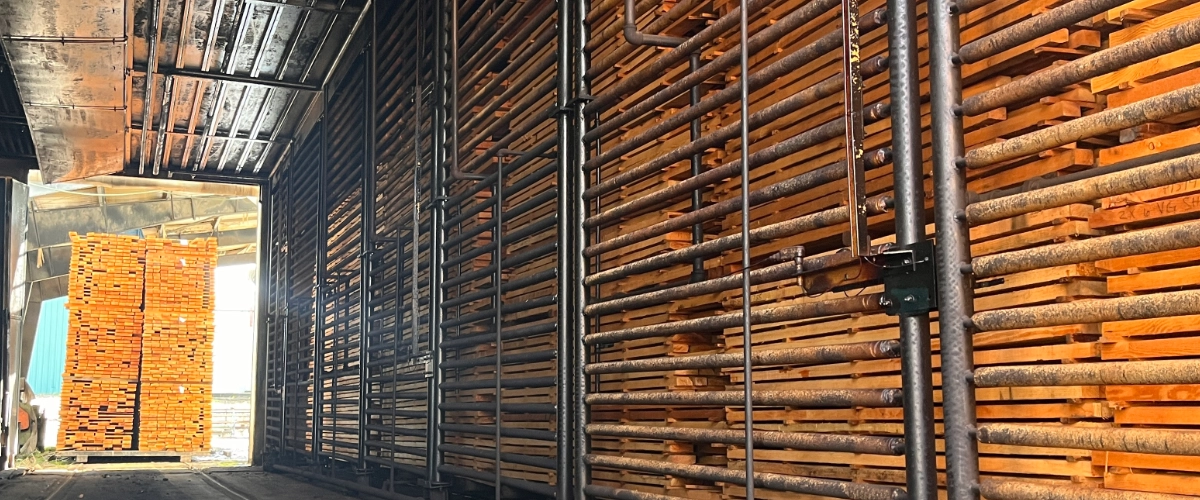
If you’ve spent any time planning a deck, floor system, or structural framing project, you’ve probably come across 2×10 kiln-dried lumber on a spec sheet or at your local lumber yard. It looks straightforward enough on the surface, but there’s actually a lot more to this board than its dimensions suggest.
Choosing the right lumber isn’t just about picking the correct size. The drying method, wood species, grade, and where the lumber comes from can all make a significant difference in how your project holds up over time. Get it right, and you’ve got a strong, stable foundation for whatever you’re building. Get it wrong, and you might be dealing with warping, shrinkage, or structural headaches down the road.
In this post, we’re going to break down everything you need to know about 2×10 kiln-dried lumber, from its actual dimensions and load-bearing specs to the best use cases and how different sources compare. Whether you’re sourcing from a big box store or a specialty mill, this guide will help you make a smarter, more confident buying decision.
What You Are Actually Getting with 2×10 KD Lumber
Before you order a stick of 2×10 kiln-dried lumber, it helps to understand exactly what those numbers mean, because the label and the actual product are not the same thing.
The nominal size is not the real size. A 2×10 actually measures 1.5 inches thick by 9.25 inches wide after kiln-drying and surfacing. That 0.75-inch difference in width might seem minor, but when you are stacking joists, calculating spans, or designing a load-bearing assembly, every fraction counts. Engineering tables and span charts are built around the actual dressed dimensions, not the nominal label, so always plan with 1.5 x 9.25 in mind.
Moisture content is where KD lumber earns its value. Kiln-dried lumber targets a moisture content below 19%, and most quality material lands between 12 and 15 percent. Compare that to green lumber, which regularly exceeds 30% moisture content. That excess water has to go somewhere after installation, and it comes out as shrinkage, warping, twisting, or cracking. Using green lumber in a floor joist system or a roof structure means you are building in movement that will show up later as squeaky floors, nail pops, and gaps. KD lumber minimizes that risk because most of the drying has already happened before it reaches your job site. You can learn more about nominal vs. actual lumber sizing to avoid layout surprises during planning.
Grade and surfacing specs directly affect structural performance. Most structural 2×10 KD lumber is sold as #2 or better, surfaced on all four sides (S4S). The grade stamp on the board tells you the species, grade, mill of origin, and moisture classification. These details are not just bureaucratic fine print; they determine allowable spans and load ratings under building code. A #2 grade 2×10 KD S4S has specific design values that engineers and inspectors rely on. Swapping in an unlabeled or lower-grade board can put your project out of compliance.
Knowing these specs upfront (actual dimensions, moisture content targets, and grade classifications) gives you a clear baseline for ordering, planning, and building with confidence.
Kiln-Dried vs. Green Lumber: What Actually Changes on the Job
The single biggest difference between kiln-dried and green lumber is not price or appearance. It is stability, and that difference shows up fast once material is on the job site.
Kiln-dried 2×10 lumber arrives with most of its moisture-driven movement already completed. The kiln process brings moisture content down to roughly 12 to 19 percent in a controlled environment, so the wood has already done its shrinking and shifting before it ever reaches your framing crew. That means significantly less warping, cupping, twisting, and bowing after installation. Green versus kiln-dried lumber comparisons consistently point to this stability advantage as the primary reason builders prefer KD material for structural framing.
Green lumber is a different story. It can look perfectly straight at the yard, pass a visual inspection, and still cause serious problems once it starts drying in place. As moisture content drops inside the wall or floor system, the wood moves, and that movement shows up as squeaky floors, nail pops through drywall, and framing gaps that affect how the whole assembly performs. These are not minor cosmetic issues; they generate callbacks and rework that eat into project margins.
Finishing is another area where the gap is obvious. KD lumber accepts paint, stain, and coatings immediately because the surface is stable enough for proper adhesion. Green lumber holds too much moisture for coatings to bond reliably, and applying finish too early leads to peeling and blistering down the road. Waiting for green stock to dry before finishing can add weeks to a schedule depending on conditions.
That timeline impact compounds across a project. With KD lumber, you can move directly into closing walls, installing drywall, or applying finishes without building in a waiting period for material to stabilize. Green lumber forces you to slow down or risk defects that show up after the job is complete.
For load-bearing applications like 2×10 floor joists and rafters, the practical value of kiln-dried lumber goes beyond convenience. Dimensional stability in structural members directly affects how loads transfer, how connections hold, and whether the system performs as designed over time. Movement in green framing lumber loosens fasteners, creates uneven bearing surfaces, and can compromise the integrity of the whole assembly. In structural work, that is not an acceptable risk.
Where 2×10 KD Lumber Gets Used in Real Projects
Now that you understand what KD lumber actually is and how it behaves differently from green stock, it is worth getting specific about where 2×10 kiln-dried lumber earns its place in real projects.
Floor Joists
Floor joists are the most common home for 2×10 KD, and for good reason. The depth of a 2×10 gives it the bending strength to handle longer spans and heavier loads than a 2×8 can manage, making it a reliable choice for main floors in residential and light commercial framing. At 16 inches on center, species like Southern Yellow Pine or Douglas Fir at #2 grade can comfortably handle standard 40 psf live loads across 14 to 16-plus foot spans. Builders favor KD here specifically because any post-installation movement translates directly into squeaky floors, soft spots, and finishes that crack or gap. You can reference Southern Pine span tables to dial in the right grade and spacing for your specific load conditions.
Roof Rafters
Roof rafters demand both strength and straightness, and 2×10 KD delivers both. If a rafter twists or crowns after installation, you end up with sheathing that will not lay flat and ridge lines that look wavy from the street. KD lumber at or below 19% moisture content largely avoids that problem because the material has already done most of its drying before it ever goes up. For pitched roofs with moderate snow loads, 2×10 rafters at 16 to 24 inches on center handle spans well into the 20-plus foot range depending on species and grade.
Deck Framing and Ledger Boards
Deck framing introduces an important wrinkle: outdoor exposure changes the conversation around species selection. A 2×10 KD ledger board or joist needs to be either pressure-treated or a naturally durable species to hold up against moisture cycling. Kiln-dried after treatment (KDAT) options give you the best of both worlds, combining decay resistance with dimensional stability that standard wet-treated lumber cannot match out of the gate.
Beams, Headers, and Openings
Doubled or tripled 2×10 KD is a practical, cost-effective solution for headers over windows, doors, and garage openings where moderate spans do not justify the cost of engineered lumber. A properly sized multi-ply 2×10 assembly can handle most residential openings up to 8 to 12 feet depending on the load above it. The Weyerhaeuser framing guide provides useful reference points for how dimensional lumber performs in these configurations.
Predictable Dimensions and Immediate Workability
Any situation where downstream trades depend on consistent framing (think tile setters, hardwood flooring installers, or finish carpenters) is a case where KD wins over green lumber every time. Green stock shrinks and moves after installation, which creates problems for everyone who comes after the framers. KD is ready to work with the day it arrives on site, no waiting required.
Species Options and What They Mean for Your Build
Not all 2×10 kiln-dried lumber is the same, and the species you choose can make a real difference in how your project performs over time. Here is a straightforward breakdown of different species.
Douglas Fir is the gold standard for structural framing in the Western U.S. It is strong, stiff, and holds fasteners exceptionally well, making it a reliable choice for floor joists, rafters, and any application where span capacity matters. If you are doing work in the Pacific Northwest or building something that needs to carry serious load, Douglas Fir is typically your first call.
Hemlock (usually sold as Hem-Fir) runs a close second. It is slightly softer than Douglas Fir but still delivers solid structural performance. In the Pacific Northwest especially, the two are often used interchangeably on framing jobs, and most span tables treat them similarly. It is a dependable option when Douglas Fir is not available or when you need something a bit easier to work with by hand.
Spruce-Pine-Fir (SPF) is the most widely used commodity framing lumber in the country, accounting for a large share of residential framing nationwide. It offers a good strength-to-weight ratio, handles and nails easily, and typically comes in at a lower price point than Douglas Fir. For standard wall framing, headers, and joists where spans are not extreme, SPF gets the job done without overcomplicating your budget.
Southern Yellow Pine (SYP) is the dominant species in the Southeast, and for good reason. It is dense, strong, and holds fasteners tightly. The trade-off is that SYP is more prone to movement, checking, and warping when moisture content is not carefully managed. Properly kiln-dried SYP performs well, but it rewards attention to drying quality more than some other species do.
Western Red Cedar and other specialty species are not your typical framing lumber. Cedar brings natural rot resistance and stability that make it valuable for exterior applications, trim, and specialty millwork where standard framing species fall short. These are the kinds of materials you source from a precision remanufacturer rather than a box store.
Species choice also shapes how your lumber machines, finishes, and holds up in your specific climate. A dense species like SYP machines differently than a lighter SPF board, and finishing behavior varies across the board. Matching species to your local conditions, your span requirements, and how the material will be processed is worth the extra thought before you order. For a complete guide to SPF lumber properties and applications, the breakdown goes deeper into what makes that species group perform the way it does.
Commodity Lumber vs. Precision Remanufacturing: The Practical Difference
Standard #2 KD 2×10 from a big-box retailer is a perfectly reasonable choice for general framing. It meets structural requirements, it is widely available, and it gets the job done when tolerances are loose and customization is not a priority. But “works fine for framing” covers a narrow slice of what builders, fabricators, and millwork shops actually need.
The core limitation with commodity lumber is that it is produced for volume, not precision. Dimensional tolerances under standard grading rules allow for meaningful variation board to board, and when you factor in wane, skip, and other permitted defects in a #2 grade, what you pull from a bundle can look quite different from what you expected. For a standard wall frame, that is manageable. For a millwork application, a tight-fit assembly, or any project where pieces need to mate cleanly, that variability costs time and material on the back end.
Moisture content is another place where the label does not tell the full story. Independent testing of retail KD lumber has found an average moisture content of around 14%, which sounds reasonable until you look at the spread within a single bundle. Board-to-board variation of 10 to 20 percentage points in the same stack is not unusual, and some boards tested well above 30%. That kind of inconsistency matters when you are building for stability, finishing, or any application sensitive to movement after installation.
Precision remanufacturing addresses both of these gaps directly. A custom remanufacturer can resaw, plane, mould, and kiln-dry material to exact specs, holding tolerances as tight as 1/64 inch. That is a fundamentally different product than what leaves a commodity mill. For contractors and fabricators working to tight specs, the difference shows up immediately: fewer shims, less rework, tighter joints, and less waste across a job.
KDHT certification is worth calling out separately here. Heat treatment to verified temperature thresholds is required for international shipping under ISPM 15 phytosanitary standards and for certain domestic applications where pest-free certification matters. Retail sources may or may not carry this designation depending on the lot and supplier, but a certified remanufacturer can provide verified KDHT material with documented traceability. If your project has compliance requirements, that documentation is not optional.
What Prime Forest Remanufacturing Brings to 2×10 KD Lumber
If you have been reading through this comparison and thinking that general commodity supply works fine for most jobs but falls short when precision actually matters, that is exactly where Prime Forest Remanufacturing fills a gap that big-box chains are not built to fill.
Precision That Shows Up in the Finished Product
The tolerances Prime Forest Remanufacturing holds, as tight as 1/64 inch using Baker resaws running a 1/16-inch kerf, are not typical for a commodity lumber supplier. That level of precision means less material waste per cut and dimensions that stay consistent across an entire order. When you are running millwork, custom joinery, or anything where fit and finish matter, that consistency is not a nice-to-have. It is the difference between a clean result and a lot of remedial work on site.
Their planing and surfacing equipment handles stock up to 4 inches thick by 12 inches wide, which covers 2×10 KD lumber comfortably and extends to larger custom needs well beyond standard framing dimensions.
Certifications That Cover Real Compliance Needs
KDHT certification is available through Prime Forest’s four HT-certified kilns, which matters significantly for international shipments and certain compliance-sensitive domestic applications. PLIB-certified grading is also on offer, supporting structural and export requirements. For projects with verified sustainable sourcing requirements, FSC and PEFC certifications are available on request. That combination is difficult to find under one roof.
Flexibility Where Commodity Suppliers Draw the Line
No minimum order requirements on Douglas Fir and Hemlock is a practical advantage that smaller custom batches genuinely benefit from. Most high-volume suppliers simply will not engage with orders that fall below their thresholds.
The 75,000-plus custom configurations referenced on our site reflect real combinations of species, dimensions, surface treatments, lengths, and processing options. That is not a rounding-up marketing claim. It reflects actual equipment capability and in-house expertise built over generations.
As a family-owned operation based in Sweet Home, Oregon, Prime Forest Products has deep roots in Western species and a track record in precision custom remanufacturing that standard supply chains are simply not structured to replicate.
Choosing the Right 2×10 KD Lumber for Your Project
By this point, you have a solid picture of what 2×10 kiln-dried lumber actually is, how it behaves, where it gets used, and what separates commodity supply from precision remanufacturing. Now it comes down to matching all of that to your specific project.
Start with your actual requirements, not a general preference. Standard commodity KD in #2 grade covers most framing scenarios without issue. But if your application involves tight tolerances, laminated assemblies, or custom profiles, you need a supplier built for that kind of work, not one that happens to have boards in stock.
Before anything ships, confirm the actual dimensions, moisture content, and grade in writing. A board stamped KD can still arrive at 17% or higher depending on storage conditions. Verify specs upfront so you are not problem-solving on the job site after delivery.
Species selection matters more than most buyers factor in. Douglas Fir, Southern Yellow Pine, Hem-Fir, and SPF each perform differently depending on load requirements, climate exposure, and finish needs. Price per board foot is one input, not the whole decision.
If your project calls for non-standard dimensions, specific certifications, or species that retail suppliers simply do not carry, Prime Forest Remanufacturing is worth your conversation. They offer precision custom work with no minimum order pressure and can tailor specs to what your project actually needs.
Treat your lumber source the same way you treat any other project specification – document it, confirm it, and choose it intentionally.
Conclusion
Choosing 2×10 kiln-dried lumber the right way comes down to a few essentials: understanding the actual dimensions, knowing your load requirements, selecting the right grade, and sourcing from a supplier you can trust. Kiln drying is not just a marketing term; directly impacts stability, longevity, and performance on the job.
The species matters. The grade matters. And where that board has been sitting before it reaches your project site matters more than most builders realize.
Now that you have a clearer picture of what sets quality lumber apart, take that knowledge with you to your next supplier conversation. Ask the right questions, request the right documentation, and do not settle for boards that will cost you more in corrections later.
Build it right the first time. Your project, and your future self, will thank you.